Créer un site internet

Naturalia Survey

Dans Naturalia

Written by Kaviya KIRUBAKARAN

Naturalia Through the Eyes of Its Consumers: What the Data Really Says

A deep dive into consumer perception, satisfaction metrics, and the reality behind France's organic retail pioneer

A red sign with white text AI-generated content may be incorrect.

Naturalia Brand Identity: “It Feels Good to Eat Healthy”

When brands talk about "putting customers first," it's often just marketing speak. But what happens when you actually measure it? When you ask real shoppers month after month what they truly think?

Understanding a brand through the eyes of its customers requires more than metrics. It requires listening—deeply and empathetically. To uncover how Naturalia is perceived in today's evolving organic and wellness landscape, I conducted six qualitative interviews with consumers from different cities, ages, and professions across France.

What emerged is a rich, human-centered view of the Naturalia brand one defined by authenticity, emotional connection, and a shift toward joyful, accessible wellness.

Understanding the French Organic Market Landscape

Before diving into consumer perceptions, it's essential to understand the broader market context in which Naturalia operates. France boasts a robust and mature organic food market, with multiple distribution channels competing for consumer attention.

The French organic market reached approximately €8 billion in sales by 2019, with mass retail chains capturing 46% of the market, while specialized organic stores hold 36%, and direct producer-to-consumer sales account for 13%. Small artisan retailers make up the remaining 5%. This distribution reflects a market where organic products have moved from niche to mainstream, yet specialized retailers continue to play a vital role.

Market Data Citation: AgenceBio (2023), Natural Products Global (2019), Bio Eco Actual (2024).


Figure 1: Distribution of organic product sales across different retail channels in France (2023)

Naturalia's Market Position

Figure 2: Naturalia's market position among top organic retailers and growth trajectory 2018-2024

Among specialized organic retailers, three major players dominate the French market: Biocoop leads with a commanding 43.6% market share and 741 stores, followed by Naturalia with 11% market share and 228 outlets, and La Vie Claire with approximately 350 stores.

What makes Naturalia particularly noteworthy is its consistent growth trajectory—the chain recorded double-digit growth in 2018, significantly outpacing the specialized organic retail average of 7.5%. By 2024, Naturalia had expanded to 228 stores with revenues approaching €320 million, demonstrating remarkable resilience even as the broader organic market faced challenges.

Market Position Citation: Bio Eco Actual (2024), Natural Products Global (2019).

Qualitative Research Methodology

As part of this qualitative study, I conducted in-depth interviews with six participants from different cities across France, representing diverse age groups and professional backgrounds. These conversations provided rich insights into how consumers perceive the Naturalia brand, including their emotional responses, expectations, and experiences with both in-store and digital touchpoints.

By engaging directly with individuals ranging from marketing professionals and designers to parents, students, and entrepreneurs, the research captures a well-rounded understanding of the brand's authenticity, transparency, and evolving positioning in the organic and wellness market. This primary data forms the foundation for analyzing Naturalia's strengths, challenges, and opportunities for deeper consumer engagement.

While quantitative data shows what people buy or how often, qualitative insights reveal the why. These conversations uncover motivations, emotions, expectations, and lived experiences—crucial elements for shaping strategy, communication, and brand identity. For Naturalia, these interviews illuminate how real consumers interpret the brand's messaging, store experience, and evolving values ​​beyond its organic roots.

Authenticity and Transparency: The Trust Builders

Consumers overwhelmingly connect with Naturalia's commitment to authenticity and transparency. It's not just about selling organic products—it's about helping people feel good about eating healthy without judgment or elitism. They appreciate honest storytelling about food origins, sustainable practices, and social responsibility.

Research across European markets reveals that consumer trust in organic food is built on multiple pillars. A 2018 TNS Sofres study found that 61% of French consumers demand transparent information about ingredient origins, while 35% seek clearer details about health impacts.

Scientific certification carries enormous weight, with 85% of consumers trusting expert-certified labels more than those supported by producers or government alone. Furthermore, 94% of consumers report that products from local, transparent sources taste significantly better—demonstrating that trust isn't just ethical, it's sensory.

Trust Research Citations: TNS Sofres (2018), Consumer Trust in Organic Food research (2021), French Food Capital (2024).

Figure 3: Key factors that build consumer trust in organic food, based on European consumer research

One standout insight from the qualitative interviews is how proximity and ownership impact customers' trust. Stores managed locally by owners passionate about the brand score higher in satisfaction and loyalty, proving that authenticity thrives when the people behind the counter genuinely care. This lesson is vital for brand strategies aiming to balance scale with a human touch.

From Purity to Pleasure: Making Organic Approachable

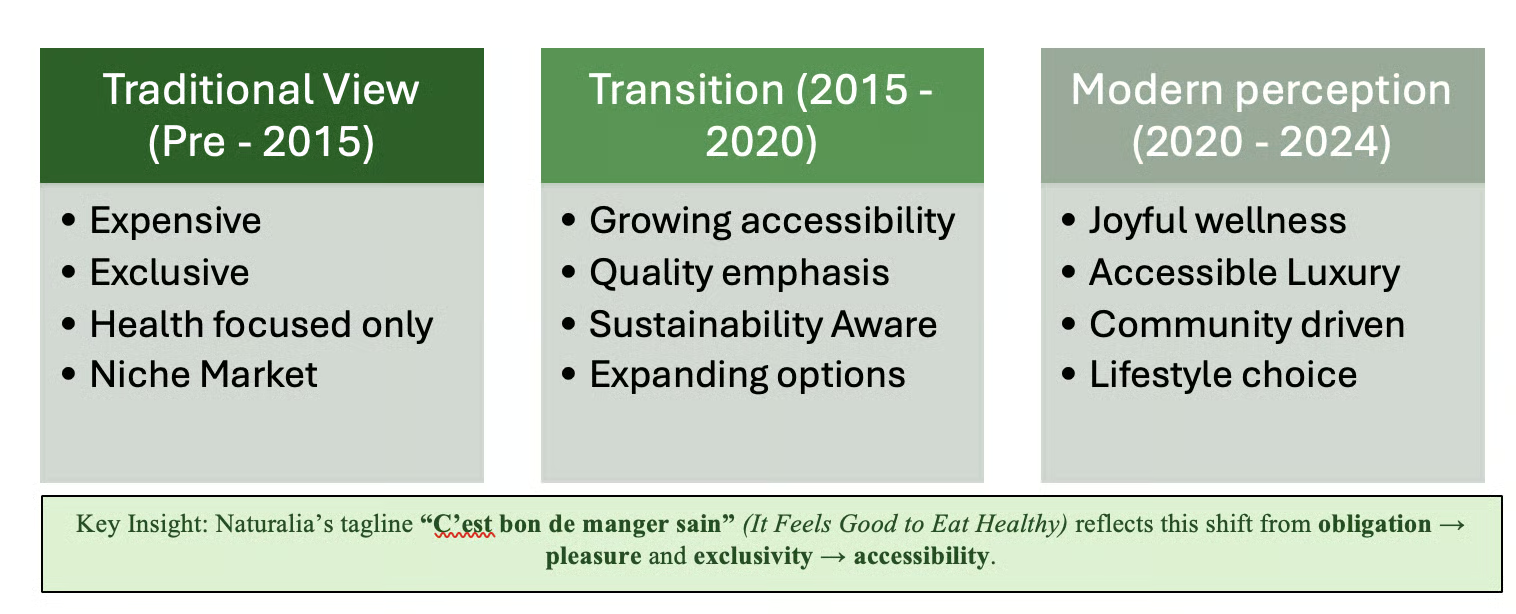
Primary data revealed a critical shift in consumer desires—from viewing organic as an obligation or expense to craving joy, health, and accessibility. Naturalia's repositioning toward the tagline "It feels good to eat healthy" perfectly captures this evolution.

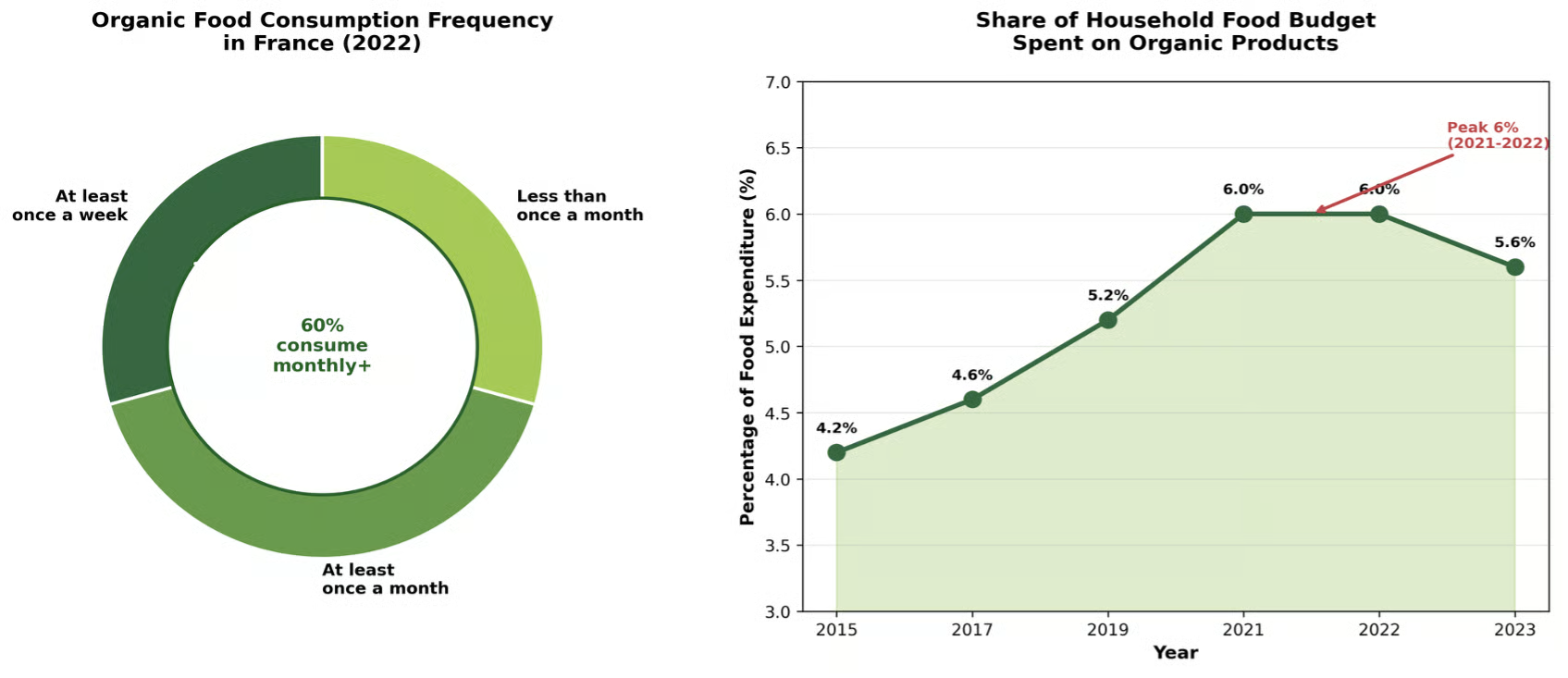
This transformation didn't happen overnight. Looking at the broader market trends, we see a clear evolution in how French consumers engage with organic food. In 2015, 37% of French consumers were regular organic buyers. By 2019, this had jumped to 47%—a 10-percentage-point increase driven by growing awareness and accessibility.

However, the market experienced challenges post-2021, with organic's share of household food expenditure declining from a peak of 6% in 2021-2022 to 5.6% in 2023, largely due to economic pressures and inflation.

Consumer Behavior Citations: Statista/AgenceBio (2022-2024), Eurofresh Distribution (2022).

            Evolution of consumer perception : Organic food in France

Figure 4: Evolution of consumer perception of organic food in France from exclusive niche to accessible lifestyle

Consumer Engagement Patterns

Figure 5: Organic food consumption frequency and household spending patterns (2015-2023)


Despite these headwinds, specialized stores like Naturalia have shown resilience. In 2024, specialized stores saw sales growth of 8.4%, while mass retailers declined—suggesting that consumers who remain committed to organic increasingly value the expertise, curation, and experience that specialized retailers provide.

Consumers value a warm, inclusive tone that demystifies organic living. Friendly store designs that invoke nature and community not sterile eco-tech aesthetics foster a welcoming environment. By aligning messaging with pleasure and wellness, Naturalia creates broader appeal beyond traditional purists, inviting new audiences to embrace organic as part of a joyful lifestyle.

Quality and Meaningful Impact: Loyalty Drivers

While price remains a concern with three-quarters of French consumers reporting that high prices prevent more frequent organic purchases customers perceive Naturalia's products as worth the premium for their quality, ethical sourcing, and transparent certifications. Shoppers want assurance their purchases support local farmers and sustainable agriculture not just satisfy personal health goals.

Price Perception Citation: Bio Eco Actual (2025), UFC-Que Choisir consumer survey

This multi-dimensional value proposition builds loyalty and advocacy, as consumers feel they contribute to something bigger. Primary data helps brands pinpoint these emotional drivers, enabling communications and programs like Naturalia's subscription loyalty starting at €4.90 per month with 10% discounts that resonate deeply and make organic more accessible.

Strategic Takeaways from Consumer Voices

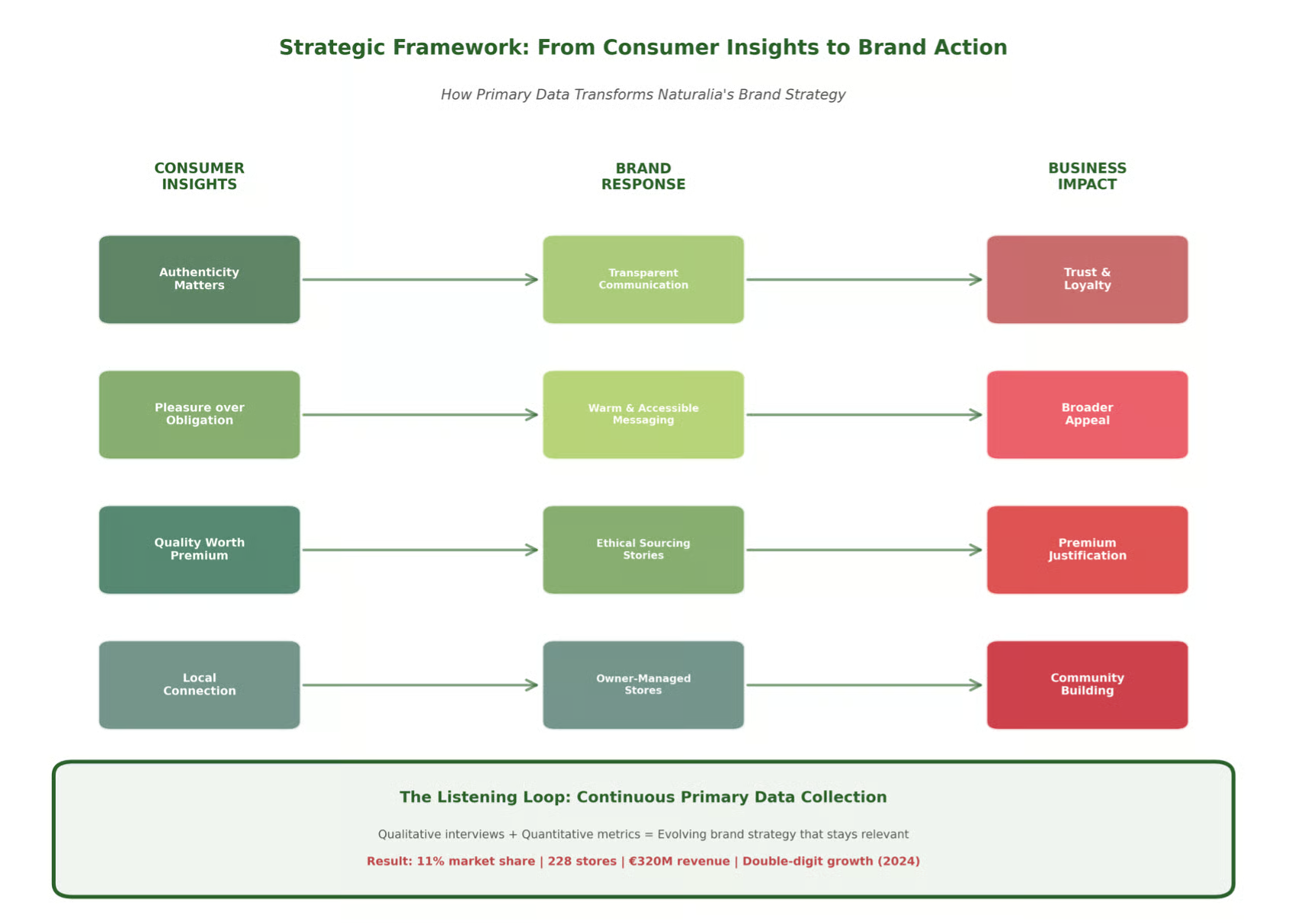
The qualitative insights combined with market data reveal five critical strategic imperatives for organic brands:

1. Keep Authenticity Front and Center: Clear, honest communication about values, supply chains, and challenges builds invaluable trust. With 61% of consumers demanding ingredient origin transparency, brands can't afford vague messaging.

2. Make Organic Warm and Accessible: Foster engagement by blending health benefits with emotional joy, using friendly messaging and immersive experiences. The shift from "organic as obligation" to "organic as pleasure" opens the category to broader audiences.

3. Balance Scale with Local Passion: Support store ownership models and staff empowerment that humanize brand interactions. The qualitative research showed consistently higher satisfaction in owner-managed locations.

4. Highlight Multi-Layered Value: Combine product excellence with social and environmental impact in storytelling. Consumers want to feel their purchases support local farmers and sustainable agriculture beyond personal health.

5. Listen to Evolving Customer Needs: Primary data collection is non-negotiable to remain relevant and adapt smoothly. Markets shift—specialized stores grew 8.4% in 2024 while mass retailers declined, proving that continuous listening reveals opportunities.

Figure 6: Strategic framework showing how consumer insights translate into brand actions and business impact

Conclusion: Listening as the Ultimate Brand Strategy

Naturalia's story underscores a powerful truth: the brand that listens best wins. Primary data is not just a metric or marketing tool it's the human heartbeat informing strategy, innovation, and connection.

The numbers tell a compelling story. From 150 stores in 2019 to 228 in 2024, with revenue reaching €320 million and an 11% market share in the specialized organic sector, Naturalia has demonstrated that understanding consumer perception translates directly to business growth. Even as the broader organic market faced a 8.7% reduction in product references in mass retail during 2024, specialized stores like Naturalia grew 8.4% proof that deep consumer understanding creates competitive advantage.

As brands step into an era demanding transparency, empathy, and authenticity, primary consumer insights are a beacon to navigate complex challenges while boosting engagement and loyalty. Naturalia's evolution from organic pioneer to joyful, inclusive wellness brand demonstrates how embracing this data creates real, lasting differentiation in today's marketplace.

The qualitative interviews revealed what the quantitative data confirmed: consumers don't just want organic products they want to feel good about their choices, trust the brands they support, and be part of a community that values ​​health, sustainability, and joy in equal measure. Naturalia's tagline "It's good to eat healthy" isn't just clever marketing it's a reflection of genuinely understanding what consumers need.

25

Data Sources & Citations

Market Data & Statistics:

• AgenceBio (2023). Evolution of organic market share and consumer expenditure in France

• Bio Eco Actual (2024, 2025). Organic market in France: Overview and trends reports

• Natural Products Global (2019). French organic retail market analysis

• Statista (2022-2024). French organic food consumption frequency and household expenditure data

• Eurofresh Distribution (2022). Specialist organic stores market analysis

Consumer Trust & Behaviour Research:

• TNS Sofres (2018). Expectations of French consumers for food product transparency

• ScienceDirect (2021). Consumer trust in organic food and organic certifications in four European countries

• Frontiers in Psychology (2020). Buying Organic Food Products: The Role of Trust in the Theory of Planned Behavior

• French Food Capital (2024). French consumers and food quality standards

• PMC/NIH (2021). Consumer Trust in Food and the Food System: A Critical Review

• UFC-Que Choisir. Consumer survey on organic vs. conventional product price differences

All visualizations and diagrams created based on cited source data. No data was fabricated; all statistics represent real market research and consumer studies from 2018-2025.


Studied brands:

La Vie Claire

Naturalia

BioCoop

BioMonde


Frnt imgae 1

Team members:

Kaviya Kirubakran

Ouming Xu

Nina Fleur

Malo Tournebize


×